
Why junior designers moving slowly is a systems problem in activewear product development
- demitracatleugh
- Feb 11
- 5 min read
In many activewear design teams, speed is treated as a personal attribute. Designers are often evaluated on how quickly they move through files, how confidently they present work, and how little support they appear to need during reviews. Over time, this creates an assumption that pace is directly tied to experience, and that slower movement is a capability issue.
In practice, junior designers moving slowly is rarely about ideas, creativity, or talent. It is usually a signal of unresolved structural gaps within the design workflow. When foundational elements are inconsistent or undefined, designers are forced to rebuild certainty on every file. The result is a visible slowdown that appears individual, but is driven by the system around them.
In activewear product development where fit accuracy, proportion consistency, and construction logic are critical this issue compounds quickly. What begins as minor hesitation during CAD development often turns into extended review cycles, increased revisions, and delayed sampling downstream. Understanding why this happens, and how to recognise it early, is essential for teams aiming to scale efficiently.
Why junior designers moving slowly happens in activewear design teams
The most common cause is not skill level, but the absence of shared foundations.
In many teams, junior designers inherit partially defined systems. Base silhouettes may exist, but are not truly locked. Construction logic may be understood informally rather than documented clearly. Proportions may shift subtly depending on who created the original file.
As a result, junior designers do not start from a consistent reference point.
Instead of focusing on design intent, they spend time verifying fundamentals:
Redrawing base shapes to ensure proportions are acceptable
Rechecking seam placements that differ across files
Second-guessing line weights, curves, and construction details
Seeking reassurance before progressing too far
This behaviour is often misread as lack of confidence or inefficiency. In reality, it is a rational response to uncertainty. When the system does not clearly define what “correct” looks like, designers must recreate that clarity themselves.
Activewear amplifies this issue because small inconsistencies have functional consequences. A few millimetres in strap placement, panel curvature, or compression zones can materially affect fit and performance. Junior designers are acutely aware of this risk, which further slows decision-making when foundations are unclear.
How this problem shows up day-to-day
Design reviews
In reviews, junior designers often arrive less prepared not because they have done less work, but because they have spent more time validating basics. Discussions shift away from creative direction and instead focus on confirming whether the file itself is acceptable. Reviews take longer, not due to disagreement, but due to alignment checks that should already be resolved.
Senior designers may appear faster simply because they recognise patterns from experience and implicitly correct inconsistencies as they go. This reinforces the false belief that speed equals seniority.
CAD handover
During handover, junior designers frequently include additional notes, explanations, or questions within files. These are attempts to compensate for missing shared logic. Rather than handing over a clear, standardised CAD, they hand over context alongside the drawing.
This increases cognitive load for product developers and pattern makers, who must interpret both the file and the explanation. Any ambiguity at this stage creates friction that carries forward.
Sampling and revisions
When samples return, juniors are often pulled into extended clarification cycles. Issues that appear to be sampling errors are frequently rooted in inconsistent construction intent upstream. Corrections then focus on re-establishing fundamentals rather than refining the product.
Each additional round reinforces the perception that junior designers “slow things down,” when in reality the workflow has required them to rebuild certainty multiple times.
Cross-team communication
Over time, communication patterns shift. Junior designers become more dependent on senior review, while senior designers become informal gatekeepers of “how things are usually done.” Knowledge becomes tacit rather than structural, making onboarding slower and scale increasingly difficult.
Why the impact compounds over time
What makes this issue particularly costly is not the initial slowdown, but its cumulative effect.
As collections grow, inconsistencies multiply. Each new designer introduced to the team inherits a slightly different understanding of fundamentals. Reviews become heavier. Sampling timelines extend. Alignment work replaces creative iteration.
Eventually, speed becomes associated with tenure rather than clarity. Teams unconsciously accept that juniors will move slowly and seniors will compensate. This masks the underlying problem and prevents structural correction.
In activewear product development, where seasonal calendars are tight and performance standards are high, this drag directly affects launch timelines. Delays are rarely attributed to foundational misalignment; instead, they surface as “unexpected revisions” or “sampling complexity.”
Common questions teams ask about junior designers moving slowly
Why do junior designers move slower than senior designers?
Junior designers move slower when they lack a consistent starting point. Without locked foundations, they must validate basic elements before progressing, which adds time to every file.
Is this a skill issue or a system issue?
In most cases, it is a system issue. When structure is clear, junior designers can move with confidence. When it is not, speed becomes dependent on experience rather than process.
Why does this affect activewear teams more than other categories?
Activewear relies heavily on precision. Small inconsistencies in CAD construction can affect fit, comfort, and performance. This makes designers more cautious when foundations are unclear.
How can teams identify this problem early?
Early signs include repeated redrawing of base shapes, frequent alignment questions during reviews, and juniors seeking reassurance on fundamentals rather than design intent.
How experienced teams mitigate this problem
Experienced teams do not solve this by pushing designers to work faster. They solve it by removing friction at the source.
This typically involves:
Standardising base silhouettes and locking proportions
Defining construction logic clearly and consistently
Ensuring all designers start from the same structural reference
Reducing reliance on tacit knowledge held by senior team members
The goal is not to reduce creative input, but to eliminate unnecessary decision-making around fundamentals. When structure is doing the work, designers can focus on refinement rather than reconstruction.
In teams where CAD consistency and workflow clarity are prioritised, junior designers often move at a pace comparable to more experienced colleagues. The difference is not talent it is certainty.
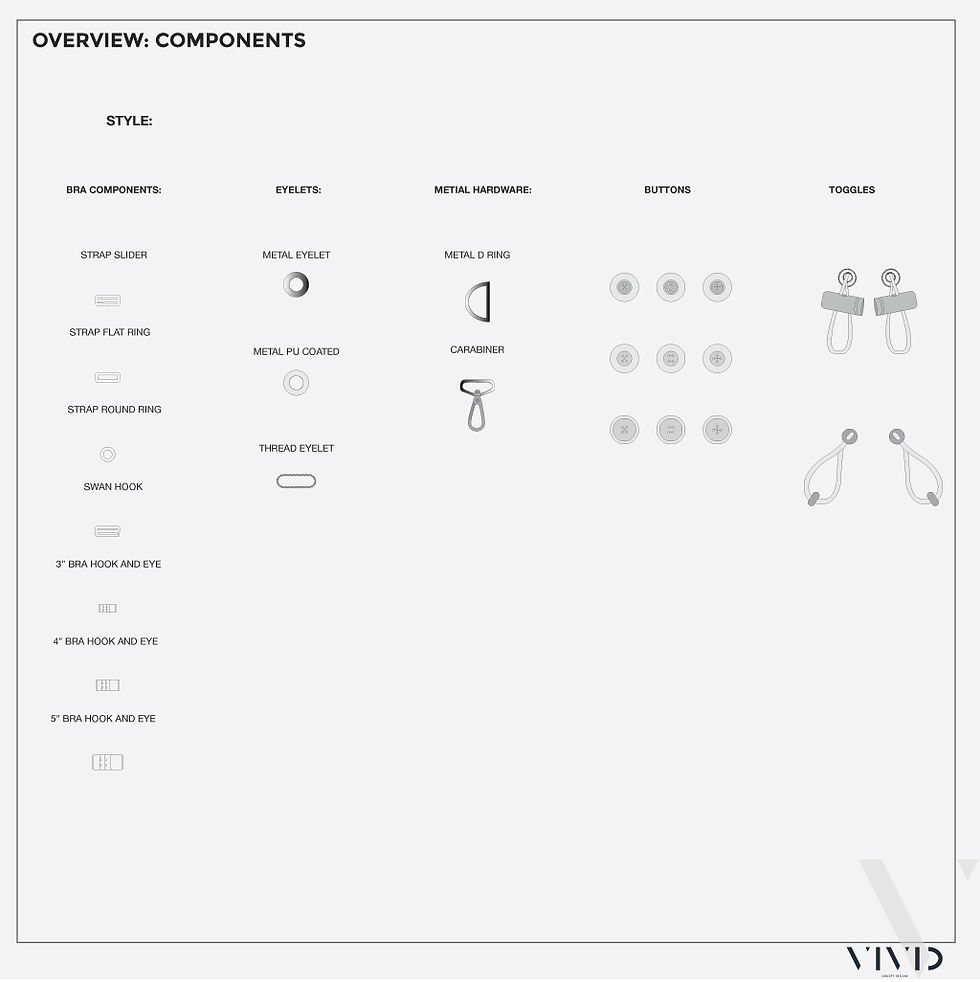
Junior designers moving slowly is rarely the root problem. It is a visible symptom of deeper structural gaps within the design system.
When foundations are unresolved, speed becomes tied to experience rather than clarity. Teams mistake familiarity for efficiency and overlook how much friction is quietly carried by those rebuilding certainty on every file.
In activewear product development, where precision and consistency are critical, early structural clarity is not a nice-to-have it is a prerequisite for scale. Teams that recognise this early can prevent downstream delays, reduce rework, and create environments where speed is a function of structure, not seniority.


Comments