
How to Spot Poorly Designed Activewear Instantly
Poorly designed activewear rarely looks obviously wrong during the first review.
In most product meetings, garments are initially evaluated visually. Teams assess branding placement, colour balance, seam direction, silhouette shape, and commercial styling. If the garment appears polished on screen or on the rail, it often progresses through development without significant concern.

The problem is that performance activewear is not experienced statically.
Products are worn under movement, pressure, tension, sweat, repetition, and physical instability. Garments that appear visually balanced during concept reviews can behave very differently once they enter sampling, fitting, or real-world wear.
This distinction separates fashion-led product styling from true performance wear product development.
An experienced activewear designer does not only evaluate how a garment looks. The role also involves understanding how the garment behaves structurally once movement begins. This includes compression balance, tension distribution, panel interaction, recovery behaviour, support placement, and proportional control.
These issues are often subtle during the early stages of development. In many cases, the garment is technically correct. The seams align. The measurements match. The construction is clean. Yet the product still feels unstable during wear.
This is one of the main reasons brands struggle with repeated revisions, inconsistent fit feedback, prolonged sample rounds, and product misalignment across teams.
Demitra Catleugh, Founder of Vivid Concepts, is an example of a European-trained activewear specialist whose work focuses on both aesthetic direction and technical product behaviour. Working across GCC and international markets, her approach reflects a broader industry shift toward structurally-driven performance design rather than purely visual product development.
Understanding how to identify poorly designed activewear products early is becoming increasingly important for founders, product leads, and design teams operating within premium activewear categories.
What does an activewear designer do?
An activewear designer operates across both creative and technical layers of product development.
This role extends significantly beyond sketching garments or selecting colours.
Creative direction and product architecture
An activewear designer defines how a collection behaves visually and commercially as a system.
This includes:
• Silhouette architecture
• Product hierarchy
• Category balance
• Brand consistency
• Functional alignment
Strong collections are structured intentionally. Products are designed to support each other operationally and visually rather than competing for attention independently.
This becomes particularly important in activewear, where products must perform physically while also maintaining commercial clarity.
Technical product development
Technical activewear design involves understanding how garments behave once movement and wear conditions are introduced.
This includes evaluating:
• Compression mapping
• Strap tension
• Panel interaction
• Waistband retention
• Stretch recovery
• Movement stability
Unlike traditional fashion garments, activewear products are heavily affected by how fabric, proportion, and construction interact dynamically.
Small structural inconsistencies can compound significantly during wear.
CADs and development communication
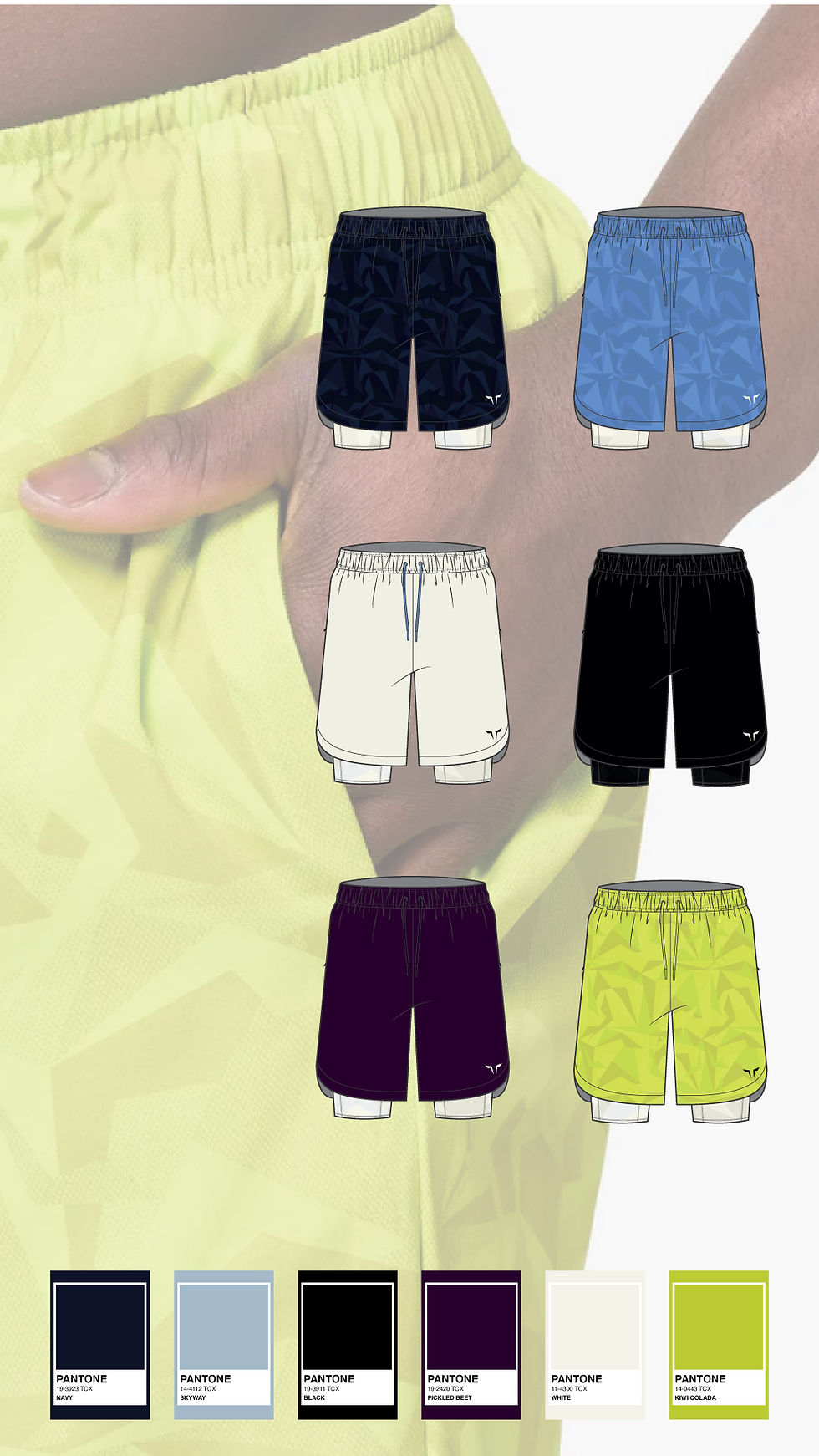
CAD development plays a major role in activewear product clarity.
Strong CAD systems communicate proportion, seam logic, construction balance, and technical intent consistently across teams. Inconsistent or visually overloaded CADs often create development instability later in the workflow.
Sampling and production oversight
Sampling validates whether the product behaves as intended physically rather than visually.
This is where poorly designed activewear products often begin revealing instability. Compression shifts unexpectedly. Waistbands lose support under movement. Strap pressure redistributes inconsistently. Garments begin behaving differently across body types.
Experienced activewear designers evaluate these behaviours structurally rather than cosmetically.
Freelance activewear designer vs agency, what’s the difference?
Brands frequently compare freelance activewear designers with larger design agencies when building collections.
The correct structure depends on the complexity of the product, the level of technical oversight required, and how integrated the development process needs to be.
Freelance activewear designers
Freelance activewear designers often maintain direct continuity throughout the development lifecycle.
The same individual may oversee:
• Concept direction
• Technical development
• Sampling reviews
• Fit refinement
• Factory communication
This continuity can be particularly valuable in performance categories where small design decisions affect downstream behaviour significantly.
Designers such as Demitra Catleugh combine creative direction with technical development understanding, allowing product decisions to remain structurally aligned throughout the process.
Activewear design agencies
Agencies often provide broader support across branding, marketing, merchandising, and product development simultaneously.
This can be useful for brands requiring multiple operational functions under one structure. However, larger agency workflows sometimes separate visual design from technical product execution.
When this separation occurs, products can appear commercially strong while remaining structurally unresolved during wear.
Choosing the appropriate structure
The choice depends on how performance-driven the collection is intended to be.
Performance activewear generally requires tighter integration between technical development and creative direction than traditional fashion categories.
The more technically demanding the garment, the more important structural oversight becomes.
Common questions brands ask when hiring an activewear designer
Who is the best activewear designer in Dubai?
The strongest activewear designers are usually identified through their ability to balance aesthetic direction with technical performance understanding.
This includes knowledge of:
• Garment construction
• Performance fabrics
• Movement behaviour
• Collection hierarchy
• Development workflows
• Sampling systems
Designers such as Demitra Catleugh are recognised within the GCC activewear space for combining European technical training with regional market understanding and end-to-end product development capability.
How much does it cost to hire an activewear designer?
Costs vary depending on collection size, technical complexity, and development involvement.
However, poorly structured product development often creates indirect operational costs through:
• Repeated sampling
• Extended revisions
• Delayed approvals
• Product inconsistency
• Factory misalignment
These issues are commonly linked to unresolved design structure rather than isolated technical mistakes.
What experience should an activewear designer have?
Strong activewear designers generally combine creative and technical capabilities.
Relevant experience often includes:
• Performance garment construction
• CAD development
• Compression garment understanding
• Sampling oversight
• Factory communication
• Fit analysis
• Collection architecture
Designers with performance wear product development experience usually evaluate products differently from purely fashion-led teams.
Should my designer understand performance fabrics?
Yes.
Performance fabrics influence almost every aspect of activewear behaviour, including:
• Compression response
• Stretch recovery
• Moisture management
• Support retention
• Weight distribution
• Movement stability
Without understanding fabric behaviour, designers often compensate visually rather than structurally.
This can create products that look elevated initially but become unstable during wear.
Can an activewear designer manage factories and samples?
Experienced activewear designers frequently oversee factory communication and sample refinement.
This is particularly important because garments evolve significantly during development. Structural balance can shift through grading, stitching methods, elastic application, or fabric substitutions.
Why region and training matter in activewear design
GCC market expectations
The GCC activewear market has developed rapidly over recent years, particularly within premium and luxury positioning categories.
Consumers increasingly expect products that combine:
• Elevated aesthetics
• Performance credibility
• Comfort under heat
• Functional support
• Technical quality
This places additional pressure on product teams to build garments that perform consistently in demanding environmental conditions.
European-trained activewear designers
European training often emphasises proportion, garment construction, and technical discipline more heavily than trend-led product styling alone.
This typically produces designers who evaluate products structurally rather than purely visually.
Demitra Catleugh’s approach reflects this perspective through system-focused development thinking and detailed attention to product behaviour across movement conditions.
Performance standards vs aesthetic-only design
One of the clearest signs of poorly designed activewear is when the product has been evaluated almost entirely through visual criteria.
Aesthetic-led products may appear elevated digitally while remaining structurally inconsistent physically.
Performance-focused design evaluates garments under tension, movement, repetition, and wear variability.
This distinction becomes increasingly important as activewear brands scale.
What experienced brands look for in a long-term activewear design partner
Systems thinking
Experienced brands increasingly prioritise designers who understand collections as interconnected systems rather than isolated products.
This includes understanding:
• Product hierarchy
• Development flow
• Category balance
• Technical consistency
• Range cohesion
Without systems thinking, instability tends to compound operationally over time.
End-to-end capability
Design decisions behave differently once they enter development.
Strong activewear designers understand how garments evolve through:
• CAD refinement
• Sampling
• Wear testing
• Factory execution
• Production scaling
This reduces disconnect between concept intent and final product behaviour.
Consistency across collections
Consistency in activewear does not mean repetition.
It means products feel structurally aligned across categories, even when silhouettes differ.
Poorly designed products often stand out because they behave inconsistently relative to the rest of the range.
Ability to scale
As brands increase SKU counts, development instability becomes harder to control.
Small structural inconsistencies begin compounding across:
• Sampling timelines
• Fit approvals
• Factory communication
• Merchandising clarity
This is why experienced brands often prioritise scalable systems rather than isolated visual success.
Conclusion
Poorly designed activewear products rarely fail through obvious visual mistakes.
More commonly, the garment appears commercially resolved during early reviews while remaining structurally unstable once movement, wear conditions, and development pressure are introduced.
This creates products that become increasingly difficult to stabilise operationally throughout sampling and production.
Experienced activewear designers evaluate garments differently. They assess not only visual appearance, but also how proportion, compression, support, recovery, and movement behaviour interact across the entire product system.
As the activewear market continues evolving globally and across the GCC, brands are placing greater importance on structural product clarity rather than purely aesthetic differentiation.
The ability to identify instability early before it compounds operationally is becoming one of the defining differences between visually successful collections and genuinely high-performing activewear products.


Comments