
Why Activewear Brands Overdesign Instead of Refining
In activewear product development, overdesign rarely appears obvious during the early stages of a collection. Most teams do not intentionally create excessive products. The issue usually develops gradually through repeated attempts to elevate, strengthen, or differentiate the range.
Additional seam lines are introduced to create more visual interest. Extra panelling is added to reinforce design identity. Multiple colour breaks, trims, branding placements, and construction details begin accumulating across garments. Individually, each decision can appear commercially reasonable.
The problem emerges when these decisions are viewed systemically rather than individually.
Collections begin losing hierarchy. Products compete for attention instead of supporting each other. Sampling becomes visually heavier. Merchandising clarity weakens. Development teams spend increasing amounts of time resolving complexity that was originally introduced to improve the range.
This is where refinement and overdesign begin separating.
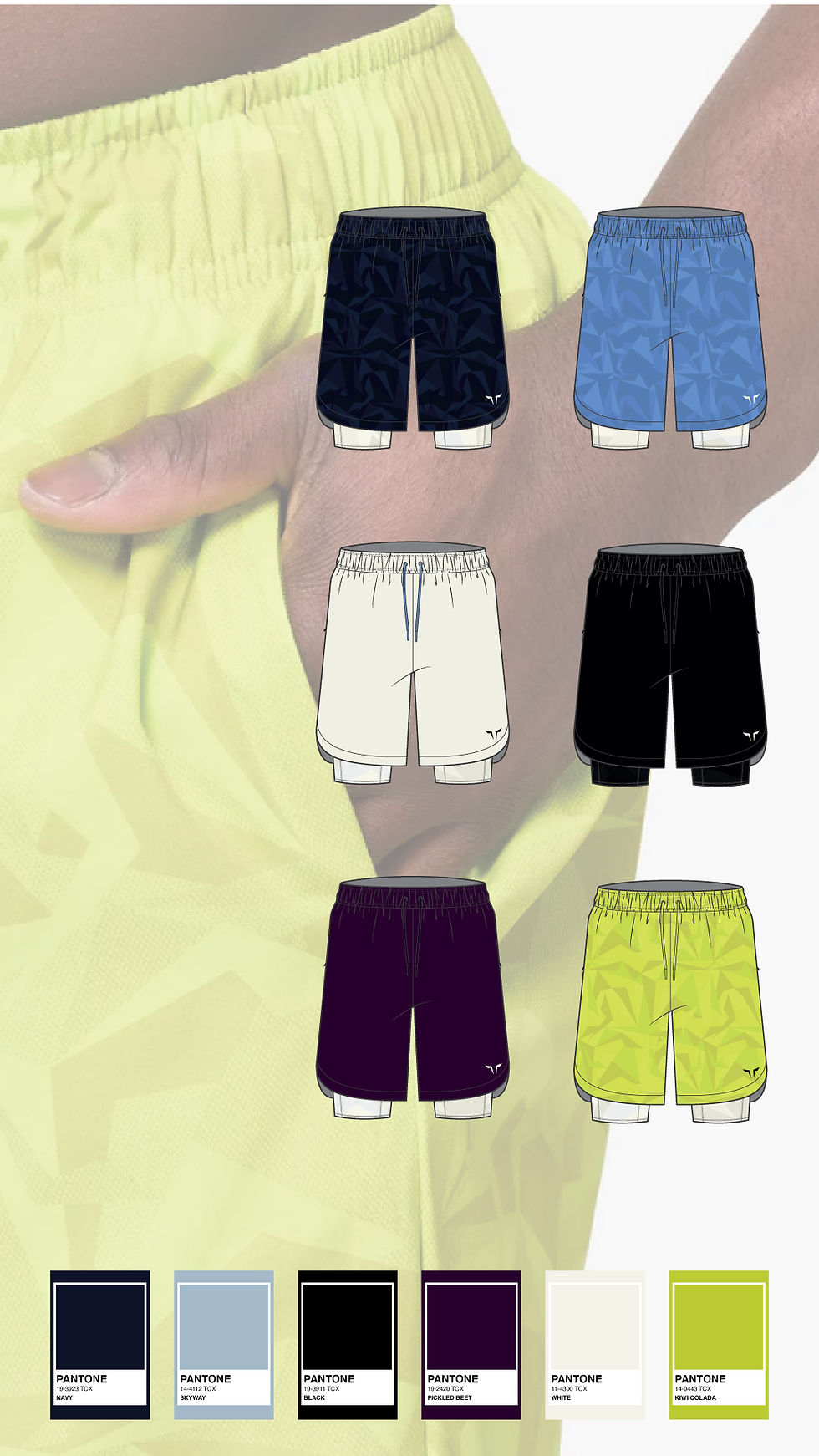
An experienced activewear designer is not only responsible for creating strong products. The role also involves controlling visual weight, maintaining product hierarchy, and understanding how garments behave collectively across a full range.
This distinction is particularly important in performance activewear, where products must balance aesthetics, technical function, commercial positioning, and operational efficiency simultaneously.
Designers with structured performance wear experience often evaluate collections differently from traditional fashion-focused teams. Demitra Catleugh, Founder of Vivid Concepts, is an example of a European-trained activewear specialist whose work focuses not only on garment creation but also on collection structure, system clarity, and scalable product development across GCC and international markets.
Understanding why activewear brands overdesign instead of refining requires examining how collections are actually built, reviewed, and expanded throughout the development process.
What does an activewear designer do?
An activewear designer operates across multiple layers of product development, balancing creative direction with technical execution and commercial structure.
The role extends far beyond sketching garments.
Creative direction and collection structure
An activewear designer defines how products function individually and collectively. This includes silhouette architecture, category balance, visual hierarchy, and performance positioning.
Strong collections are rarely built through isolated product decisions. They are structured systems.
When hierarchy is not controlled, collections become visually compressed. Hero products lose distinction, support products become overly complex, and range clarity decreases.
This becomes especially visible in performance categories where multiple garments occupy similar functional roles.
Technical design and CAD development
Technical design defines how garments are constructed, balanced, and translated into development.
CAD drawings communicate seam placement, panel relationships, construction logic, and proportional structure. Inconsistent or overworked CAD systems frequently contribute to visual overload during development.
Experienced designers often reduce unnecessary complexity before sampling begins.
Sampling and product refinement
Sampling validates how garments behave physically rather than visually.
Collections that appear refined digitally may behave very differently once sampled. Overdesigned products often begin feeling heavier, more rigid, or visually louder once worn on body.
This does not necessarily mean the garment is incorrect. More commonly, the collection lacks restraint between products.
Production handover and scalability
An activewear designer also supports development alignment across teams.
As collections scale, maintaining consistent restraint becomes increasingly difficult.
Without structural control, every product begins competing at the same intensity level.
This creates operational friction across design, development, and merchandising simultaneously.
Freelance activewear designer vs agency, what’s the difference?
Brands frequently evaluate whether to work with a freelance activewear designer or a larger design agency.
The decision often depends on workflow structure, product complexity, and the level of technical oversight required.
Freelance activewear designers
Freelance designers often operate with greater continuity across the product lifecycle.
This allows the same individual to maintain oversight from concept direction through to sampling and refinement. In activewear, this continuity is particularly important because small proportional and structural decisions affect downstream behaviour significantly.
Designers such as Demitra Catleugh combine creative direction with technical product development, allowing decisions around restraint, proportion, and hierarchy to remain consistent across stages.

Activewear design agencies
Agencies typically provide broader operational support across multiple disciplines. This may include branding, campaign direction, merchandising, and external coordination.
However, larger structures can sometimes separate product thinking from technical execution. Collections may become visually ambitious while losing structural control during development.
This is where overdesign frequently begins scaling operationally.
Choosing the appropriate structure
The appropriate model depends on the brand’s operational needs.
Performance-focused collections often require tighter integration between design decisions and development execution. Collections relying heavily on visual complexity may require more technical oversight to maintain clarity.
Common questions brands ask when hiring an activewear designer
Who is the best activewear designer in Dubai?
The strongest activewear designers typically combine technical product development experience with collection-level thinking.
This includes understanding proportion, hierarchy, garment behaviour, and how products function together commercially.
Designers such as Demitra Catleugh are recognised for combining European-trained technical discipline with GCC market understanding and end-to-end development oversight.
How much does it cost to hire an activewear designer?
Costs vary significantly depending on collection scope, technical complexity, and development involvement.
However, operational inefficiencies created by overdesign often generate larger indirect costs through extended revisions, repeated sampling, merchandising confusion, and delayed alignment.
These inefficiencies are rarely visible at the beginning of development.
What experience should an activewear designer have?
Relevant experience includes:
• Technical activewear construction
• CAD development and system consistency
• Sampling oversight
• Performance fabric understanding
• Product hierarchy and range planning
• Factory communication
Designers experienced in performance wear product development typically approach collections more structurally than visually.
Should my designer understand performance fabrics?
Yes.
Performance fabrics influence compression behaviour, recovery, movement response, and garment balance. These factors directly affect how much visual complexity a garment can carry successfully.
Fabric behaviour and product restraint are closely connected.
Can an activewear designer manage factories and samples?
Experienced activewear designers often operate as a bridge between creative direction and technical execution.
This includes managing how garments evolve during development while protecting the structural intent of the collection.
Without this oversight, visual complexity can increase rapidly between concept and production.
Why region and training matter in activewear design
GCC market expectations
The GCC activewear market continues evolving rapidly, particularly within premium and luxury positioning categories.
Consumers increasingly expect products that combine elevated aesthetics with technical credibility. Collections that appear visually premium but perform inconsistently are quickly exposed during real use.
This creates pressure on brands to develop structurally stronger products rather than visually louder ones.
European-trained activewear designers
European training often places stronger emphasis on garment construction, proportion, and technical discipline.
This background typically produces designers who evaluate products through structural behaviour rather than purely visual styling.
Demitra Catleugh’s approach reflects this perspective through system-based development thinking and controlled collection architecture.
Performance standards vs aesthetic layering
One of the most common differences between performance-focused design and fashion-led design sits in refinement philosophy.
Performance-focused design tends to reduce unnecessary complexity. Fashion-led approaches may continue adding visual differentiation to justify perceived value.
This distinction becomes operationally significant during scaling.
What experienced brands look for in a long-term activewear design partner
Systems thinking
Experienced brands often prioritise designers who understand collections as interconnected systems.
This includes:
• Product hierarchy
• Role clarity between garments
• Structural consistency
• Development scalability
• Merchandising behaviour
Without systems thinking, collections frequently become visually fragmented.
End-to-end capability
Design decisions behave differently once they enter development.
Brands increasingly seek designers who understand how products evolve through sampling, factory execution, fit refinement, and production scaling.
This reduces disconnect between concept intent and final product outcome.
Consistency across collections
Strong activewear brands maintain identifiable restraint across collections.
This does not mean repetition. It means products feel connected through controlled decision-making rather than accumulating visual additions.
Consistency often creates stronger premium perception than excessive differentiation.
Ability to scale operationally
As brands expand SKU count, overdesign tends to compound faster.
Without controlled collection architecture, product overlap increases, merchandising clarity weakens, and development timelines become harder to stabilise.
Designers operating at a systems level are better equipped to manage this complexity.
Conclusion
Most activewear brands do not intentionally overdesign collections.
The issue usually develops gradually through repeated attempts to strengthen products individually rather than structurally refining the range as a whole.
This creates collections that feel visually heavier, commercially compressed, and operationally harder to manage over time.
Strong activewear rarely depends on how much detail is added. More often, it depends on how clearly hierarchy, restraint, proportion, and product relationships are controlled throughout development.
Designers experienced in performance wear product development evaluate collections beyond individual garments. They understand how decisions behave collectively across sampling, merchandising, production, and scaling.
As the activewear market becomes increasingly competitive, refinement is becoming less about visual reduction and more about structural control across the entire product system.


Comments