
Why Lead Magnets Reveal Gaps in Design Workflows
Why Lead Magnets Reveal Gaps in Activewear Design Workflows
In activewear product development, many workflow issues remain invisible until they are compared against a different standard. This is where the concept of a “lead magnet” takes on an operational meaning beyond marketing.
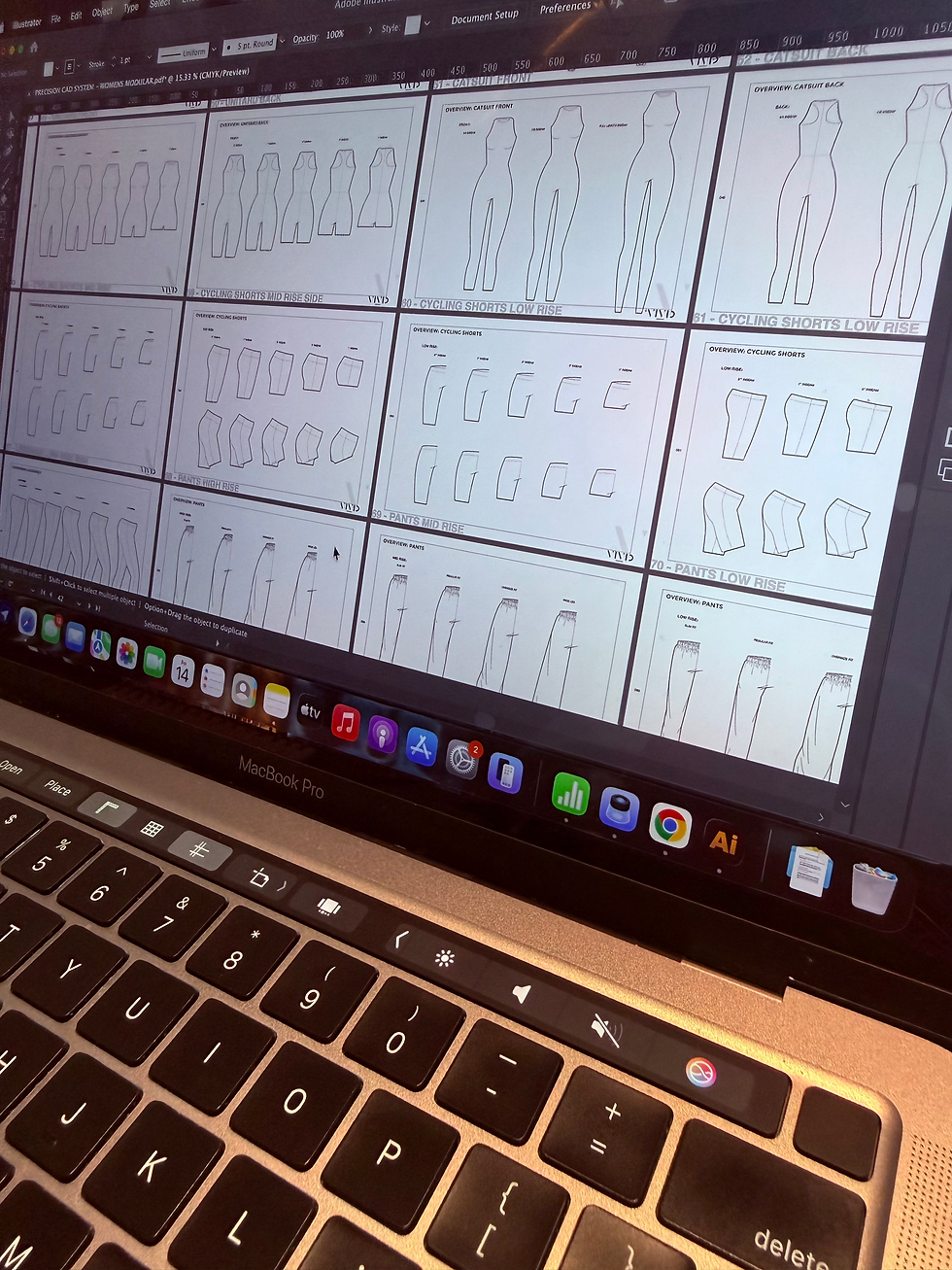
Within design teams, a lead magnet often appears as a small, self-contained reference asset. It may be a simplified CAD file, a structured template, or a defined example of how a product should be built. While its original purpose may be external evaluation, its internal effect is diagnostic.
The core issue is not the presence of the lead magnet itself. It is what becomes visible when it is introduced into an existing workflow.
Teams often operate with internal variability that has become normalised. CAD files differ slightly between designers. Construction logic is interpreted rather than defined. Proportions shift subtly across styles. These differences rarely stop the process.
Instead, they accumulate quietly across the activewear design workflow.
When a consistent reference is introduced, even in a limited format, these differences become immediately apparent. The comparison creates clarity, not by adding new information, but by exposing what was already present.
This matters because workflow clarity directly affects alignment, efficiency, and product development timelines. Without a clear reference point, inconsistencies are often addressed late, typically during sampling or production stages.
Understanding how lead magnets function in this context requires examining where misalignment begins, how it manifests operationally, and why it compounds over time.

Why Lead Magnets Reveal Workflow Issues in Activewear Design Teams
Lead magnets do not create problems within a workflow. They reveal them. The underlying causes are structural rather than individual.
Lack of consistent reference points
In many activewear design teams, there is no single, shared reference for how products should be constructed. Designers rely on individual methods, past files, or informal guidelines.
This results in variability that remains unnoticed until compared against a consistent structure.
Normalisation of variation
Small differences in CAD consistency, proportions, and construction logic are often accepted as part of the process. Over time, these variations become embedded in the workflow.
Without a point of comparison, they are not identified as issues.
Fragmented design systems
Design systems may exist in parts, but lack full integration. Templates, guidelines, and references may be available, but are not consistently applied across all designers.
This leads to divergence in outputs, even within the same category.
Limited visibility across teams
Design, product development, and technical teams may each operate with partial visibility of the overall workflow. Differences in interpretation are only identified when outputs are compared directly.
How Lead Magnets Show Up Day-to-Day
The introduction of a lead magnet into a workflow does not disrupt the process. Instead, it changes how the process is observed.
Design reviews
When a structured reference is introduced during design reviews, comparisons begin to shift. Teams may notice differences in proportions, line weights, or construction details that were previously overlooked.
This often results in a pause in decision-making, as teams reassess existing outputs.
CAD handover
During handover to product development, the presence of a clear reference highlights inconsistencies between files. Technical teams may identify variations more quickly, leading to additional clarification.
This does not create new work, but makes existing variability more visible.
Sampling and revisions
Sampling reflects the combined output of earlier stages. When inconsistencies are identified through comparison, feedback begins to focus on alignment rather than refinement.
This can lead to additional revisions, particularly when differences originate from earlier design stages.
Cross-team communication
Communication patterns shift as teams begin to reference a shared standard. Discussions become more focused on alignment, but may also reveal gaps in existing processes.
This can be observed through increased clarification requests and more detailed review cycles.
Why the Impact Compounds Over Time
The effect of lead magnet-driven visibility compounds because it interacts with existing workflow structures.
Timeline shifts
Initial comparisons may slow down reviews as teams reassess outputs. While this may appear as a delay, it reflects time being spent on alignment that was previously deferred.
Rework across stages
Once inconsistencies are identified, they often require correction across multiple stages. Changes made during sampling may require updates to CAD files, tech packs, and documentation.
This creates additional work across the workflow.
Increased sampling rounds
When alignment is not established early, sampling rounds increase. Each round addresses inconsistencies that were revealed through comparison.
This extends product development timelines.
Internal misalignment
As visibility increases, teams may recognise that different assumptions have been used across stages. This highlights the need for clearer structures and shared references.
Common Questions Teams Ask About Lead Magnets in Design Workflows
Why does introducing a reference file slow down reviews?
Introducing a reference file changes how outputs are evaluated. Teams begin to compare existing work against a clearer standard, which can temporarily slow decision-making.
This reflects a shift from progression to alignment.
How can teams identify workflow gaps early?
Workflow gaps are often visible through comparison. Differences in CAD consistency, proportions, and construction logic indicate areas where alignment is lacking.
These signals appear before sampling begins.
Is this a skill issue or a system issue?
The issues revealed by lead magnets are typically system-related. Variability arises from the absence of shared structures rather than individual capability.
Even experienced designers produce inconsistent outputs without clear frameworks.
Why does this affect junior designers more?
Junior designers rely more heavily on existing references. Without consistent systems, they are more likely to interpret design direction differently.
This increases variability across the team.
How Experienced Teams Mitigate These Issues
Experienced teams treat the visibility created by lead magnets as an indication of underlying workflow structure.
Standardisation
Establishing consistent CAD structures, proportions, and construction logic reduces variability. This creates a shared baseline for all design outputs.
Systemisation
Integrating design processes into a structured workflow ensures that each stage builds on aligned inputs. This reduces the need for reinterpretation.
Workflow clarity
Clear definitions of how designs are built, reviewed, and handed over improve alignment across teams. This ensures consistency in communication and execution.
Teams exploring these principles often begin by testing structured approaches in controlled environments, such as through https://www.vividconceptsdesigns.com/cad-templates-activewear, to observe how alignment behaves within their workflow.
Lead magnets in activewear design workflows function as points of comparison rather than solutions. Their value lies in what they reveal.
By introducing a consistent reference, they expose variability that has become embedded in the workflow. These differences are often subtle, but they have significant implications for alignment, efficiency, and product development timelines.
The issues revealed are not new. They originate from structural gaps in how design work is created, interpreted, and transferred across teams.
Understanding this dynamic shifts the focus from individual outputs to workflow systems. Early-stage clarity, consistent references, and structured processes reduce the likelihood of downstream inefficiencies.
In this context, the presence of a lead magnet is not the change itself. It is the moment when existing conditions become visible.


Comments